People choose furnished for the arrival — one suitcase, a bed already there. The departure is the half nobody evaluates, and it is where the furnished decision either pays off or quietly does not. A move-out from an unfurnished room is a logistics project. From here it is an afternoon.
What you take and what stays
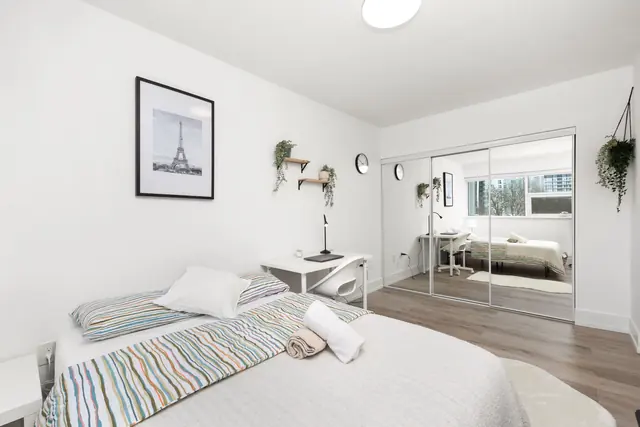
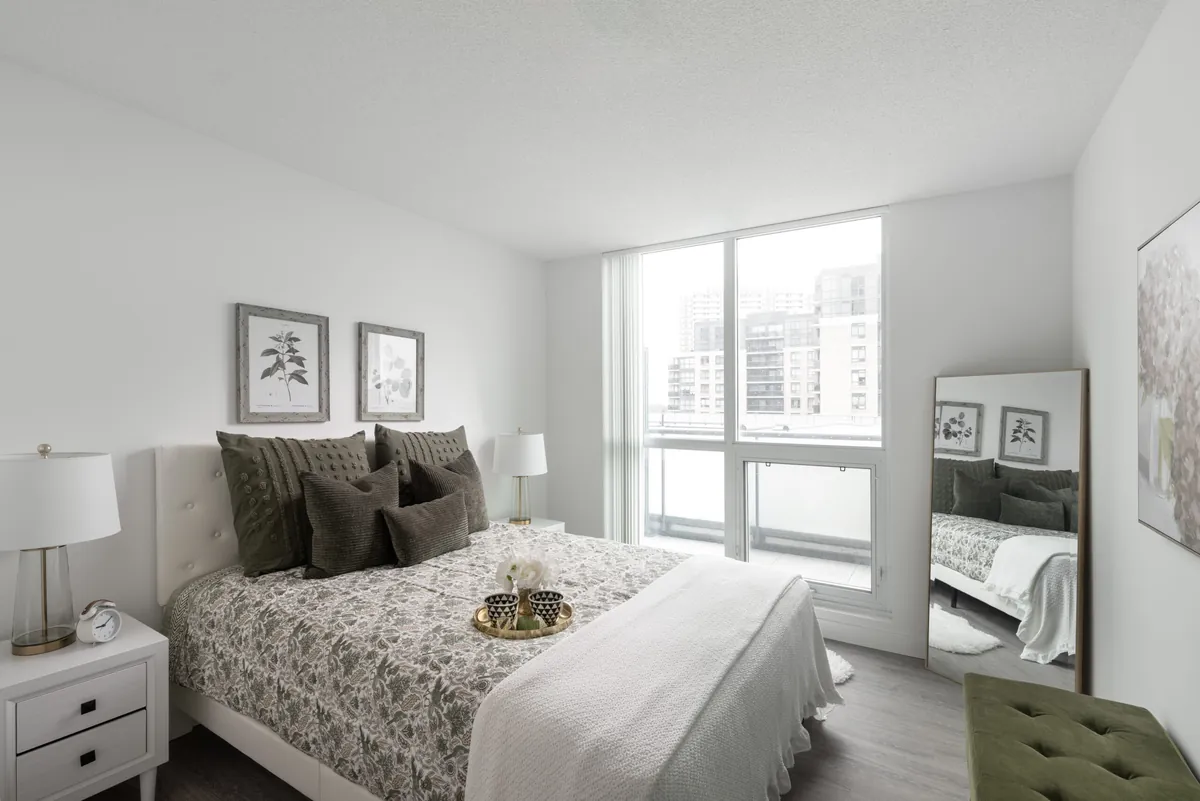
You take what you brought. The bed, the mattress, the linens, the desk, the task lamp, the chair, the wardrobe and the shelving stay, because they were never yours — and in the Deluxe grades so does the wall-mounted television. The suite kitchen keeps its fridge, range, oven, microwave, dishwasher, kettle, pots, pans, plates and cutlery.
Which means there is nothing to sell, nothing to give away on a local listings site in the last fortnight, and nothing to pay a van for. The whole category of end-of-lease furniture disposal does not apply. That is not a small thing: it is the line that decides the twelve-month comparison, and it only shows up at the end.
The key deposit comes back
The $150 key deposit is returned when the keys are returned. That is what it is for and that is the whole mechanism.
Worth being precise about the vocabulary, because this is where Ontario renters get misled most often. Ontario permits a rent deposit and a key deposit. It does not permit a damage deposit, and anyone holding money against the state of the room at the end is doing something the law does not allow. If you were charged last month's rent if you are approved without a guarantor, that money is the rent deposit and it pays for your final month rather than being held and assessed.
So at the end there is no inspection determining how much of your money you get back. There is a key, and then there is $150.
If you have to leave before the term ends
Plans change mid-term more often than leases allow for, so this is the mechanism rather than a reassurance.
Tell the resident manager as soon as you know. A lease can be assigned to another resident with our approval, and there is a waiting list for most room types, so in practice a replacement is usually found. Standard Ontario tenancy rules apply either way.
The structural advantage over a shared house is that you are not finding that replacement yourself. On a joint lease in a house share, leaving early means persuading two other people and then recruiting a stranger they will accept. Here your name is against your room and nobody else’s tenancy is affected by yours ending.
The short checklist
What actually has to happen, in order.
- Tell the resident manager your date as early as you have one.
- Close out what is in your name — which for most people here is a phone plan and nothing else, since hydro, heat, water and the internet were never in your name to begin with.
- Clear your shelf of the fridge and your cupboard, which the two people staying will thank you for.
- Pack what you brought. If that was a suitcase, it is a suitcase.
- Hand back the keys and the $150 comes back.
No utility final readings, no furniture to shift, no account to transfer. The minimum term is 4 months, so for a lot of people this happens on the date they always knew it would.
More on furnished rooms
- Furnished vs unfurnished
- What to bring to a furnished room
- The kitchen test
- Furnished room vs a monthly short-stay
- Furnished rooms in North York