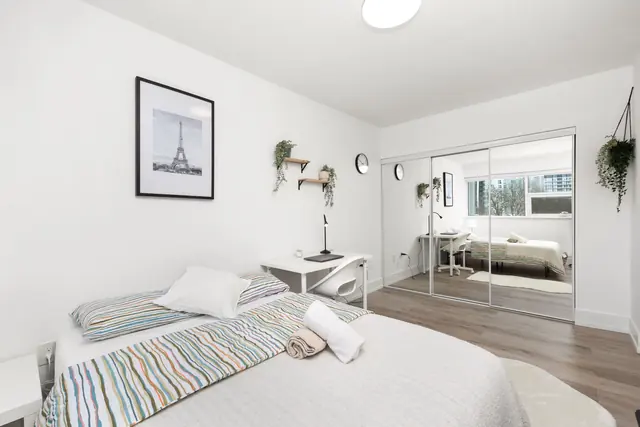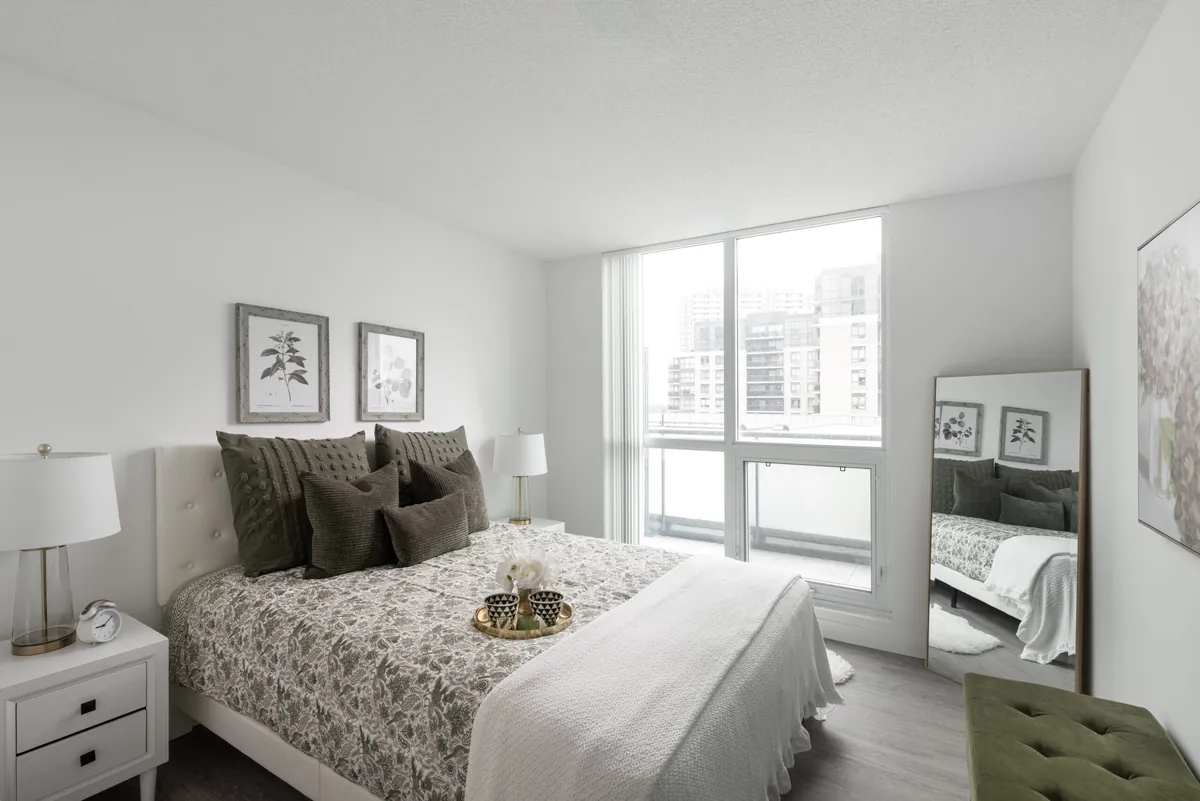
Furnished is a relief until you are packing, at which point it becomes a guessing game. People overpack the things that are already in the suite and underpack the four or five that are not, then spend their first evening in a shop instead of unpacking.
Bring these
- Bedding. Sheets, a duvet or blanket, a pillow. Bed sizes differ by room grade, so check yours on the room types page before you buy sheets.
- Towels. The most commonly forgotten item, every single term.
- Toiletries and anything you use to clean your own room.
- An unlocked phone and its charger.
- Documents. Photo identification, proof of enrolment or your employment letter, and whatever supports your application.
- A power adapter if you are arriving from outside North America.
Leave these — they are already here
- Furniture of any kind. Bed, desk with a task lamp, wardrobe and shelving are in the room.
- Kitchen equipment. The suite has a fridge, oven, microwave, dishwasher, kettle, pots, pans, plates and cutlery.
- A router. The internet is installed and paid for — a minimum 1 Gbps line into the suite.
- A fan or heater. Air conditioning and heating are in the rate, with a thermostat in each suite.
The judgement calls
A monitor. Worth it if you work or study long hours, and awkward to fly with. Every room has a desk, so there is somewhere to put one.
Your own pan or knife. The kitchen is equipped, but people who cook seriously usually want one or two of their own things. Label them.
Winter clothing. Arriving before November, buy it here rather than carrying it. Arriving in January, do not wait.
The first hour
You collect a key card at the front desk. The room is ready, the internet works, and the kitchen has what you need to cook that night.
If something is missing or broken, tell the resident manager on the first day rather than the second week. It is a building with someone in it, which is the entire point of not renting a room in a divided house.