First year in residence teaches you very little about renting, because residence hides almost everything renting involves. One payment, a furnished room, a term that ends on a known date, and somebody else dealing with the boiler. Second year is when all of that becomes yours, and the usual mistake is comparing a residence fee with a rent figure as though they were the same kind of number.
What residence was quietly doing for you
Five things, roughly in order of how much they cost to replace.
- Utilities. No hydro account, no bill in February, no deposit to open one.
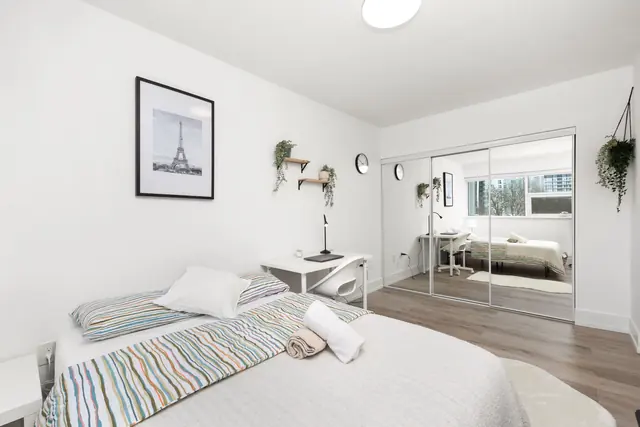
- Furniture. A bed, a desk, a chair and storage, already there.
- Internet. Connected on arrival, with no install appointment and no contract longer than your stay.
- A term with an end. Residence ends when the academic year does. A standard lease runs twelve months whether your year does or not.
- Somebody to tell. When a lock fails at eleven at night, there is a desk.
Any of these can be replaced. The error is not noticing that you have to.
The twelve-month trap
This is the one that costs second-year students real money, and it is structural rather than anybody’s fault.
Your academic year is eight months. The standard Toronto apartment lease is twelve. So you either pay for four months you are not here for, or you spend April trying to find a subletter for the summer — competing with every other student doing exactly the same thing in exactly the same week.
The minimum term here is 4 months and rooms are available all year, so an eight-month stay is an eight-month stay. If you want to stay through the summer, you stay. Nothing about the building’s calendar forces either choice on you.
What is genuinely different from residence
Being straight about this, because the pitch writes itself otherwise and you would find out anyway.
No meal plan. The suite kitchen is equipped — fridge, range, oven, microwave, dishwasher and the pots and plates to go with them — and groceries are along Finch Avenue West, so a weekly shop does not need a car. But you are cooking, which under exam pressure is a genuine difference from a dining hall.
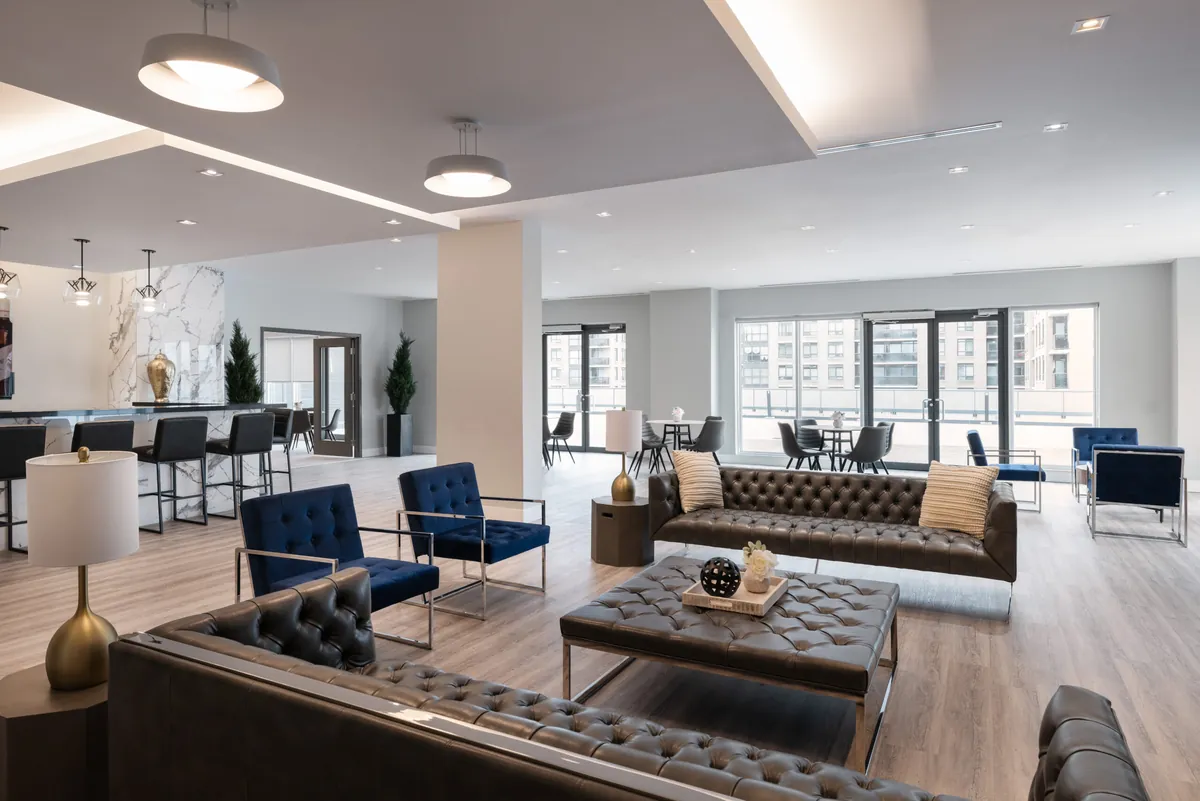
Fewer people. A suite holds three bedrooms; the city caps it there. That is quieter than a residence floor and it is also less social by default. The two amenity floors are where that balance gets struck — the library lounge has enforced quiet hours during exams, and the games room and theatre are the other direction.
A real tenancy. Your own lockable room, your name on an individual lease, and Ontario tenancy rules rather than a residence agreement. That is more protection, and more paperwork.
What to ask wherever you look
Four questions that separate a managed building from a divided house, which is the real choice most second-year students are making without framing it that way.
- Is the lease individual or joint? On a joint lease a flatmate leaving can become your rent. Leases here are individual.
- What is in the rate, and what arrives as a separate account? Hydro, heat, air conditioning, water and a minimum 1 Gbps line are inside it here.
- Who fixes things, and how fast? Report it in the portal; urgent work is same-day and anything else is scheduled within 72 hours.
- Can you hold the room while you decide? A reservation holds a specific room for 48 hours at no cost.
Rooms start at $220 a week, which is $953 a month with everything above inside it. Worth putting next to your residence fee as a whole number rather than a rent.
More on student housing
- Residence or off-campus
- Winter semester housing
- Still looking for September
- Your first Toronto lease from abroad
- Humber College off-campus housing