Shared housing was designed around people who left in the morning. Enough of us now do not, and a suite that works when everybody is out at nine can fall apart when all three are on calls at eleven. It is a solvable problem, but it is solved by where you can go rather than by anything in the listing.
Bandwidth is the easy half
Dealing with the question everyone asks first: the internet is a minimum 1 Gbps line into each unit, which we install and pay for, shared by the suite’s three residents.
The distinction that matters is the one the phrase hides. This is not a building network shared by four hundred suites, which is what "high-speed internet included" usually means and why it degrades at eight in the evening. It is a line into your unit, divided three ways. Three simultaneous video calls is not a demanding load for that.
So bandwidth is genuinely not the constraint. Space is.
A desk in the room, not a laptop on the bed
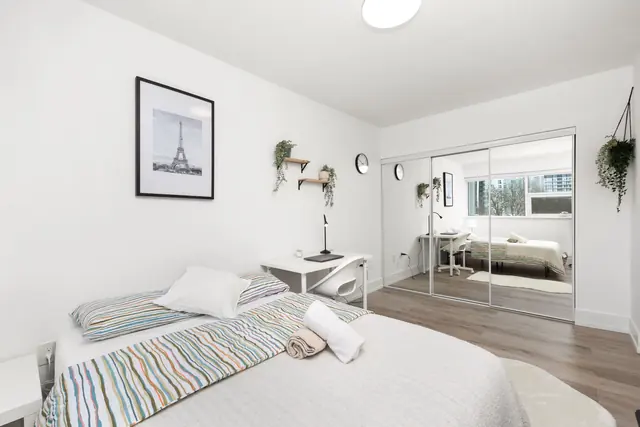
Every room has a study desk with a task lamp and a chair, and a window. The door locks.
That sounds minor and it is the single most important fact in this article. A great deal of shared accommodation gives you a bed and expects the kitchen table to be your office, which works until two other people also want the kitchen table. A desk behind a door that closes means your default working position is not negotiated with anybody.
The grades differ in how much room there is around that desk, and if you work from home every day that is the variable worth paying for rather than guessing at. The room types page has all six; the Deluxe grades also add a wall-mounted television, which some people use as a second screen.
The library lounge is the actual answer
Two amenity floors exist and for a remote worker one room on them matters more than the rest combined.
The library lounge has soft seating, long tables and enough power outlets, and quiet hours are enforced during exam periods. That gives the suite a release valve: when all three of you need to concentrate at once, somebody leaves rather than everybody compromising.
For a call you do not want overheard, the yoga and stretch studio is bookable by the hour through the resident portal, which is a slightly unorthodox use of it and a genuinely quiet room. The party room has a private dining room and is bookable too — people do use it for a long working day when they need a table to spread out on.
What to settle with your suitemates in week one
None of the above helps if the three of you have never said what your days look like. Two conversations.
Say when your calls are. Not a schedule — just whether you are on calls all morning or all afternoon. Placement here already works on schedule and sleeping hours, so there is a reasonable chance you do not collide much; but knowing beats assuming.
Agree what the living space is during work hours. If one person treats it as an office by default, the other two have lost a room without discussing it. Easiest version: the shared space is nobody’s office, and anyone who needs one goes upstairs.
Rooms start at $220 a week with the line, the desk and the amenity floors inside that. For anyone whose commute is to a desk eight feet from their bed, the amenity floors are not a perk — they are most of the reason the arrangement works.
More on co-living
- What the amenity floors are for
- What the lease covers
- Co-living when you are not a student
- Three bedrooms, never four
- Co-living or your own apartment