Co-living is a marketing word, and underneath it there is only ever a tenancy agreement. The useful question is not what the category promises but what the document says you are renting, for how long, and alongside whom. Here is the shape of it.
You lease a room, not a share of a suite
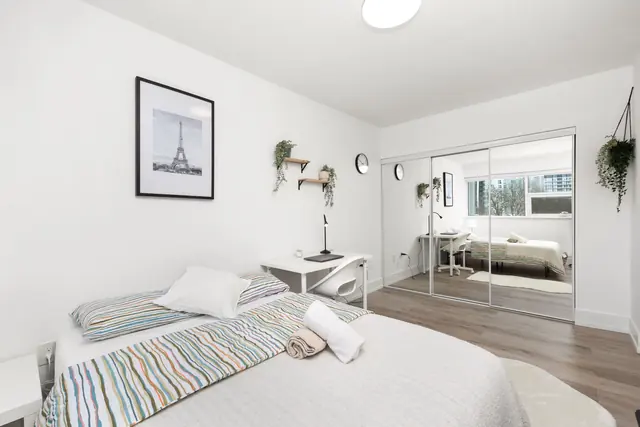
The unit on the agreement is one bedroom. It locks, it is yours for the term, and nobody else has a key to it. The kitchen, the living space and the bathroom are common parts you have the right to use, shared with the two other residents of the suite.
That distinction does most of the work. You are not buying a third of a flat and arranging the rest privately; you are renting a room in a managed building, and the shared space comes with it.
Individual, not joint
This is the clause worth finding in any shared-housing agreement you are handed, here or anywhere. On a joint lease every tenant is responsible for the whole rent together, so one person leaving or stopping paying can land on the others.
Leases here are individual. Your name is against your room and nothing else. You pay your rent; if a suitemate leaves, that is our room to fill and not your bill to cover. The same applies to deposits — your $150 key deposit is yours, not a pooled sum that one person’s damage can reduce for everybody.
The term, and the end of it
The minimum is 4 months and rooms are available all year, so the term is set by what you need rather than by an academic or calendar cycle.
If your plans change mid-term, tell the resident manager as soon as you know. A lease can be assigned to another resident with our approval, and there is a waiting list for most room types, so in practice a replacement is usually found. Standard Ontario tenancy rules apply either way — the point of saying it plainly is that the answer should not be a surprise discovered in month three.
What it does not cover
A fair reading of any agreement includes its edges.
- Parking is an additional monthly charge, and spaces are limited — ask when you apply rather than after you move in.
- Your own room. Cleaning it and stocking it is yours; the amenity floors and laundry room are maintained, your bedroom is not.
- A bathroom of your own. The highest grade adds a private toilet and hand basin, but the shower is still shared, in every grade without exception. Any listing that implies otherwise is worth a second question.
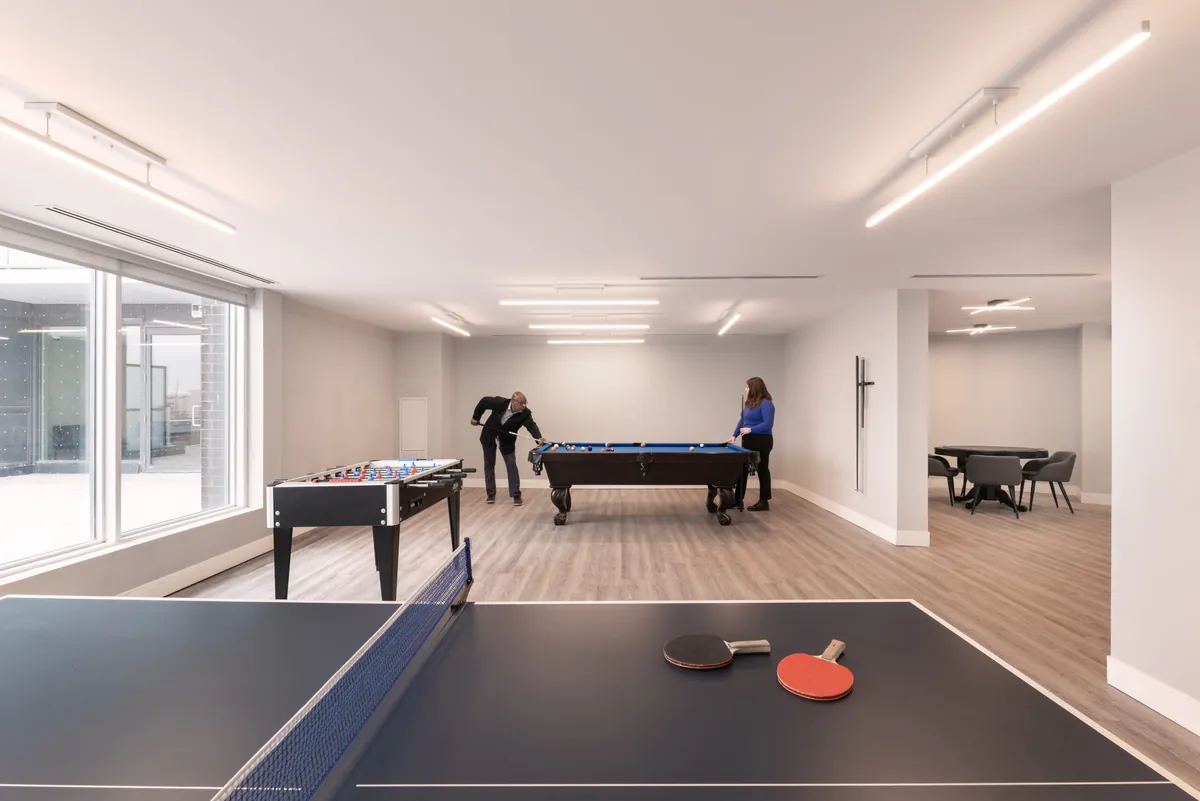
What is inside the weekly rate: hydro, heat, air conditioning with a thermostat in each suite, water, a minimum 1 Gbps internet line, the furniture, the two amenity floors and the laundry room. How it works has the costs and the sequence in full.