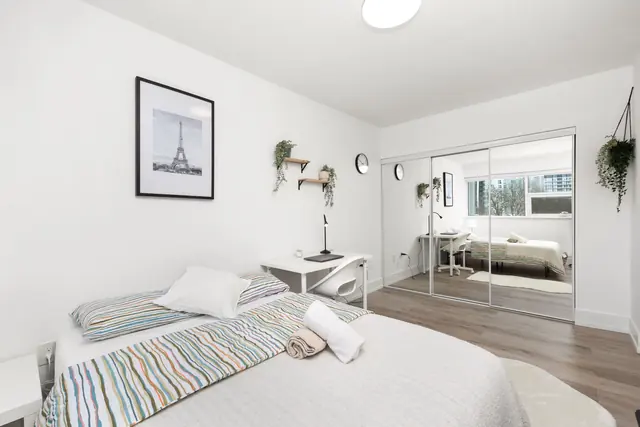
The photographs in co-living advertising are almost always of undergraduates, which puts off a large number of people it would suit. Hospital staff, people on contracts, graduate students, and newcomers spending a first year in Canada all live this way, and their reasons are not a first-year's reasons.
Why working people choose it
A defined stay. A contract, a secondment or a first year in a new country all have an end date. A twelve-month lease and a flat to furnish is the wrong shape for that.
Nothing to set up. No hydro account, no internet contract, no furniture bought and sold at a loss. You arrive and start the job.
The money goes somewhere else. A room at $220 a week with everything in it leaves a great deal more of a salary intact than a studio in this city does.
The honest downsides at this stage of life
You share a kitchen and a bathroom with two people, and you did not choose them. If you are used to your own place, that is the adjustment — not the size of the room.
If you work nights, say so on the application. Placement here is by schedule and sleeping hours, and a night shift next to a nine o'clock start is the one pairing that reliably goes wrong.
What makes it work in this building
Three bedrooms to a suite, never more. One resident per room on an individual lease, so nobody's departure becomes your bill and the number sharing your kitchen cannot grow.
Two amenity floors matter more to a working resident than to a student: somewhere to take a call, somewhere to work that is not your bedroom, and a gym you are not paying a separate membership for. See the building.
Applying without a student file
The route is the same for everyone: a guarantor, or documented income. For a working applicant that is usually simpler — payroll slips or an employment letter — and where approval is on income rather than a guarantor, last month's rent if you are approved without a guarantor.
A resident manager reads every application and replies within two business days.